tiistai 17. kesäkuuta 2014

Otetaanpa uudestaan * Once again

Olen lueskellut jo toiseen kertaan Matti Myllykosken kirjaa Justinos Martyyrista nähdäkseni, mitä kristinuskon aamuhämärissä puhuttiin tetragrammista. Justinoshan eli 100/114 - 162/168. Kirjoitin kyllä juuri äskettäin havainnostani, että Justinos ei mainitse tetragrammia. Mutta nyt minun on kirjoitettava vielä uudelleen samasta aiheesta, sillä Justinos EI TODELLAKAAN MAINITSE TETRAGRAMMIA.

Again I have been reading about Justinos the Martyr (written by Matti Myllykoski) just in order to find out what did people know know about the Tetragrammaton in the beginning of the Christianity. Recently I wrote that Justinos doesn't mention the Tetragrammaton. But now I have to write again about the same thing, for Justinos REALLY DOESN'T MENTION THE TETRAGRAMMATON.

Sivulla 95 Myllykoski kirjoittaa Justinoksen ajatuksista: "Kukaan ei kykene antamaan nimeä sanoin ilmaisemattomalle Jumalalle; jos joku julkenisikin väittää sellaisen olevan olemassa, hän osoittaisi olevansa parantumaton hullu."

On page 95 Myllykoski writes about Justinos: "Nobody is able to give the name to the not-expressed God; if somebody would dare to argue that such a name exists, he'll show he is an incorrigible madman."

On merkillepantavaa, että samassa kappaleessa sivulla 96 viitataan Moosekseen ja Palavan pensaan tapahtumiin. Mooseksen kuulemat sanat Justinos tulkitse seuraavasti: "Minä olen se, joka on, Aabrahamin Jumala, Iisakin Jumala, Jaakobin Jumala, sinun isiesi Jumala. "Näin ollen Justinos yhdistää 2. Moos. 3. luvun 14. ja 15. jakeen sanat yhdeksi lauseeksi.

It's notable that in the same connection on page 96 Myllykoski writes about Moses and his experience by the Burning Bush. The words that Moses did hear there Justinos summarizes like this: "I am the one who is the God of Abraham, the God of Isaac, the God of Jacob, the God of your fathers." Thus Justinos joins the words from the verses 14 and 15 together and makes one sentence of them.

Tästä käy selville:
1. Justinos ei tunnista sanaa אהיה ( = OLEN) miksikään erityiseksi nimeksi... niin kuin juutalaiset
2. Justinos ei tunnista myöskään sanoja אהיה אשר אהיה (= OLEN JOKA OLEN) miksikään erityiseksi nimeksi... kuten juutalaiset tekevät
3. Koska Justinos ei mainitse myöskään tetragrammia tai sen vastinetta "Herra" (kts. jae 3: 15), on varsin todennäköistä, että siinä tekstissä, jota hän aikanaan luki, EI OLLUT TETRAGRAMMIA OLLENKAAN
4. Edellä mainituista seikoista johtuen on luonnollista, että Justinos puhuu "ilmaisemattomasta Jumalasta"

My summary:
1. Justinos doesn't notice the word אהיה (= I Am) as any name... like the Jews
2. Justinos doesn't notice the words אהיה אשר אהיה = I am that I am any name either... like the Jews
3. Because Justinos doesn't mention either the Tetragrammaton or any counterpart of it like "Lord" (look at the verse 15), the text he was reading in his time likely HADN'T THE TETRAGRAMMATON AT ALL.
4. Therefore it's natural that Justinos spoke about "the not-expressed God".

lauantai 14. kesäkuuta 2014

Siitä vaan * Be a devil

Näin helposti tekstin muuttaminen voi käydä. Esimerkkinä 1. Moos. 7: 23

A successful modification of the text so easily.

An example Gen. 7: 23

Hepreaksi:

In Hebrew:

וימח את כל היקום אשר על פני האדמה מאדם עד בהמה עד רמש ועד עוף השמים וימחו מן הארץ וישאר אך נח ואשר אתו בתבה׃


Jakeen alkuosasta ei löydy subjektia, vaan maailman hukkuminen/hävitys on käännettävä passiivissa. HUOM! Tästä jakeesta ei löydy tetragrammia!


There is no subject in the beginning of the verse, and the drowning of the world must be expressed in passive voice. Note! There is no Tetragrammaton in this verse!


Suomeksi 1654 ja 1776:

In Finnish 1654 and 1776:

"Niin hukutettiin kaikki ne, kuin maan päällä olivat, ihmisestä niin karjaan asti, ja matoihin, ja taivaan lintuihin asti, kaikki hukutettiin maan päältä, ainoastansa Noa jäi, ja ne jotka hänen kanssansa olivat arkissa."


Ensimmäinen suomenkielinen käännös noudattaa passiivimuotoa.

The first Finnish version is the translation of the passive voice.


Suomeksi 1933:
In Finnish 1933:

"Niin Herra hävitti kaikki olennot, jotka maan päällä olivat, niin hyvin ihmiset kuin myös karjaeläimet, matelijat ja taivaan linnut; ne hävisivät maan päältä. Ainoastaan Nooa sekä ne, jotka olivat hänen kanssansa arkissa, jäivät henkiin."

Jakeen alkuosaan on lisätty tekijäksi/subjektiksi "Herra" jakeen alkuosaan.

"Herra" (the Lord) has been added as a subject in the beginning of the sentence.


Suomeksi 1992:
In Finnish 1992:

"Näin Herra pyyhkäisi maan päältä kaikki elävät olennot, ihmiset, karjaeläimet, pikkueläimet ja linnut; kaikki ne hän pyyhkäisi pois. Jäljelle jäivät vain Nooa sekä ne, jotka olivat hänen kanssaan arkissa."

Virheellinen käännös on saanut jatkua lauseen alussa, ja sen loppuosaan on lisätty myös persoonapronomini "hän", joka vain korostaa virheellistä käännöstä.

The modification of the text goes on in the beginning of the verse, and the personal pronoun "hän" (he) has been added in the end of the sentence, which makes the modification more deeper.


Suomeksi 2012:
In Finnish 2012:

"Näin Herra pyyhkäisi pois kaikki olennot maan päältä, sekä ihmiset että karjaeläimet, pikkueläimet ja taivaan linnut. Ne pyyhkiytyivät pois maan päältä. Vain Nooa ja ne, jotka olivat hänen kanssaan arkissa, jäivät henkiin."

Raamattu kansalle - versiossa löytyy ensin aktiivia (jossa "Herra" on subjektina) ja sitten passiivia. Tosin alkuosan subjekti on kirjoitettu "Herra" eikä "HERRA", niin kuin niissä jakeissa, joissa tetragrammi esiintyy heprean kielessä.

In this version we'll find both active and passive voice. But the subject has been written "Herra" not "HERRA" as usual when the Tetragrammaton occurs in the Hebrew text.

Ihmettelyä:
1. Jos "Herra" korvaa tetragrammia ja tetragrammi puolestaan Jumalan nimeä, voidaanko siihen suhtautua näin kepeästi!
2. Mitä eroa on Herralla ja HERRALLA!
3. Kuka piileksii "Herran" takana!
4. Kuka piileksii "HERRAN" takana!
5. Jos tetragrammia ja sen korviketta "Herra" on näin helppo lisätä raamatun tekstiin, onko mikään ihme, että tetragrammi esiintyy Vanhassa Testamentissa 6828 kertaa, ja sen suomenkielinen korvike ilmeisesti vieläkin useammin!

Wondering:
1. If the word "Herra" substitutes the Tetragrammaton and the Tetragrammaton substitutes God's name, can it be treated so lightly around!
2. What is the difference between Herra and HERRA!
3. Who is hiding behind Herra!
4. Who is hiding behind HERRA!
5. If it's so easy to add the Tetragrammaton and it's substitute into the Bible text, is it any wonder that the Tetragrammaton occurs in the Old Testament 6828 times and it's Finnish substitute obviously still more!


Saksaksi 1545:
In German 1545:

"Also ward vertilget alles, was auf dem Erdboden war, vom Menschen an bis auf das Vieh und auf das Gewürm und auf die Vögel unter dem Himmel: das ward alles von der Erde vertilget. Allein Noah blieb über, und was mit ihm in dem Kasten war."

Saksaksi 1906:
In German 1906:

"So vertilgte er alles Bestehende, was auf dem Erdboden war, sowohl Menschen als Vieh und Gewürm und die Vögel unter dem Himmel; und sie wurden vertilgt von der Erde, so daß nur Noah übrig blieb und was bei ihm im Kasten war."

Ruotsiksi 1917:
In Swedish 1917:

"Så utplånade han alla varelser på jorden, både människor och fyrfotadjur och kräldjur och himmelens fåglar; de utplånades från jorden, och allenast Noa räddades, jämte det som var med honom i arken.

Ruotsiksi 1998:
In Swedish 1998:

"Alla levande varelser på jordens yta utplånades, både människor och fyrfotadjur, kräldjur och himlens fåglar. De utplånades från jorden. Bara Noa och de som var med honom i arken räddades."

KJV 1769:

"And every living substance was destroyed which was upon the face of the ground, both man, and cattle, and the creeping things, and the fowl of the heaven; and they were destroyed from the earth: and Noah only remained alive, and they that were with him in the ark."

MKJV:

"And every living thing which was on the face of the earth was destroyed, from man to cattle, and to the creeping things, and the fowls of the heavens. And they were destroyed from the earth, and only Noah was left, and those that were with him in the ark."

UKJV:

"And every living substance was destroyed which was upon the face of the ground, both man, and cattle, and the creeping things, and the fowl of the heaven; and they were destroyed from the earth: and Noah only remained alive, and they that were with him in the ark."

TS1998:

"So He wiped off all that stand, which were on the face of the ground – both man and beast, creeping creature and bird of the heavens. And they were wiped off from the earth. And only Noaḥ was left, and those with him in the ark."

Webster:

"And every living substance was destroyed which was upon the face of the ground, both man, and cattle, and the creeping animals, and the fowl of heaven; and they were destroyed from the earth; and Noah only remained [alive], and they that [were] with him in the ark."


perjantai 13. kesäkuuta 2014

Vieläkin siitä Nimestä * Still about the Name

"Modernissa juutalaisessa uskonnossa yksi hyvin keskeinen oppi on Jumalan nimen tuntemattomuus ja ihmiselle saavuttamaton pyhyys... Moderni juutalainen uskonto opettaa, että Jumala on saattanut oman nimensä unohduksiin kaikilta ihmisiltä, koska ihmiset eivät ole arvollisia tuntemaan Hänen pyhää nimeään. Juutalaiset rabbit suhtautuvat asiaan jopa niin vakavasti, että he opettavat Jumalan nimen lausumisen tai sen merkityksen tutkimisen olevan kadotukseen johtava kuoleman synti." (Raamattu 2005)

"The unfamiliarity of God's name and the sanctity overhead human pursuit is a central doctrine in the modern Jewish religion. The modern Jewish religion teaches that God has caused every people to forget his name, because people are not worthy to know his holy name. The Jewish rabbis take it seriously and they teach that to study the meaning of God's name and how to pronounce it is a mortal sin leading to destruction." (Raamattu 2005)

************************


Kirjoitan nyt vielä tämänkin ihmettelyni siitäkin huolimatta, että modernin juutalaisuuden edustajat ovat saattaneet langettaneet ylleni jo kadotuksen tuomion, kun kyselen ja ihmettelen tetragrammin merkitystä ja sen mahdollista oikeaa lausumistapaa.

I'll write even this blog text although the modern Jews may have judged me to destruction, because I'm asking and wondering the meaning of the Tetragrammaton and how to pronounce it.

Ihmisten maailmassa jokaista yksilöä kutsutaan sillä nimellä, millä tämä itse esittäytyy. Minun nimeni on Helinä, enkä kyllä tykkäisi, jos minua alettaisiin kutsua virallisesti esim. nimellä "Hän, joka helisee." Ihmisten on syytä käyttää minusta oikeaa nimeä, mikäli tahtovat osua oikeaan henkilöön.

In the human world every single person is called by the name he/she has presented. My name is Helinä/Tinkle/Jingle, and I do not like if I would officially be called "she who tinkles/jingles". People should use my right name, if they want to refer to the right person.

Jumalan kohdalla tämä sääntö ei näytä toteutuvan. Jumala ilmoitti selkeästi nimensä olevan EHJEE (2. Moos. 3: 14), mutta tuo nimi on väännetty välittömästi seuraavassa jakeessa muotoon Jahve (2. Moos. 3: 15), ja tuota jälkimmäistä muotoa on viljelty läpi Vanhan Testamentin melkein 7000 kertaa.

It seems to me that this rule doesn't work with God. God informed very clearly that his name is EHYEH (Ex. 3: 14), but already in the next verse it has been changed to Yahweh (Ex. 3: 15), and this form has been used in the Old Testament almost 7000 times.

Kuten jo tiedämme Ehjee = Minä olen. Tuo minä-muodossa oleva nimi antaa ymmärtää, että sen  valitsi ja antoi Jumala itse. Jahve = "Hän saattaa tulemaan (joksikin)"... jonka jotkut vääntävät heprean kieliopista piittaamatta jopa muotoon "Hän on"... ja tuo hän-muodossa oleva nimi viittaa selvästi siihen, että se on ihmisten Jumalalle keksimä nimi. 

As we know already Ehyeh = "I am." That name in the first person of singular implies that God himself chose and gave that name. Yahweh = "He makes to become (to something)"... which has even distorted to the form of "His is" ignoring totally the Hebrew grammar... and the form in the third person of singular proofs clearly that people have invented that name.

Mikä Jumalan itsensä ilmoittamassa Ehjee-nimessä on niin vaikeaa, ettei sitä voida käyttää? Vastausta ei taida löytyä! 
What is so difficult in the name Ehyeh, that it could not be in use? No answer!

Miksi selvämerkityksinen Ehjee-sana on pitänyt korvata epämääräisellä tetragrammilla, joka on täysin inhimillinen väännös Jumalan ilmoittamasta nimestä? Vastausta ei taida löytyä tähänkään kysymykseen! 
Why, Ehyeh, the word of the clear significance has been replaced by the obscure Tetragrammaton, which is a man-made contortion of God's name? No answer!

Milloin tetragrammin lausumisesta mahtoi tulla epäselvyyttä... tuleeko se lausua Jahve vai Jehova? Mahtaako tähänkään kysymykseen löytyä vastausta!
When did the obscurity begin how to pronounce the Tetragrammaton... Yahweh or Jehovah? Could it be there is an answer to this question!

Justinus Marttyyri (100/114 - 162/168) tunsi pyhät kirjoitukset ja niiden kautta mitä luultavimmin myös tetragrammin, mutta hän oli sitä mieltä, että Jumalaa "ei kutsuta millään annetulla nimellä."

Justinos the Martyr (100/114 - 162/168) knew the holy scriptures and most obviously even the Tetragrammaton, but he was thinking that we can't call God by any name.

Teologi Clement (n. 150 - 215) kirjoitti tetragrammin lausumisesta: "se nelikirjaiminen nimi... lausutaan (kreikaksi) 'IAOUE', joka on käännettynä 'hän joka on ja tulee olemaan'." (Stromata, osa 5, luku VI). Lausumistapa puoltaa muotoa Jahve.

A theologian Clement (150 - 215) wrote about the pronunciation of the Tetragrammaton: "the four-lettered name... is pronounced (in Greek) 'IAOUE', and it means 'he who is and shall be'." (Stromata volume 5, chapter VI). This pronunciation refers to Yahweh.

Cyrrhuksen piispa Theodorent (393 - 460) kirjoitti, että Jumalan nimi lausutaan (kreikaksi) "IABE" (2. Mooseksen kirjan kommentaari). Lausumistapa puoltaa muotoa Jahve.

Theodorent, he bishop of Cyrrhus (393 - 460) wrote that God's name is pronounced (in Greek) "IABE" (The commentary of Exodus). This pronunciation refers to Yahweh.


Yhdelläkään noista kolmesta miehestä ei näytä olevan tietoa tetragrammin lausumisongelmasta. Milloin tetragrammin konsonanttien alapuolelle alettiin kirjoittaa vokaalit Shewa (puolivokaali e) ja Qamets (täysvokaali a)? Tuolla vokalisaatiolla vihjattiin, että tateragrammi tulisi lausua muodossa Jehvah/Jehova. Ja milloin heprean kieleen keksittiin sääntö, ettei "Jod-kirjaimen jälkeen tuleva puolivokaali voi olla 'a' eli Hatef Patah." Se antaa siis ymmärtää, ettei tetragrammin ensimmäinen vokaali voi olla a.

None of those three men has no problem how to pronounce the Tetragrammaton. When did these vowels appear under the consonants: Shewa (reduced e) and Qamets (reduced a)? This vocalization refers to Jehvah/Jehovah. And when the Hebrew rule was made that the reduced 'a' (Hateph Pathach) can't follow the consonant Yod. It means that the first vowel can't be a.

Tiedämme sen, että ns. masoreetit (700 - 1100 j.Kr.) keksivät heprean neliöfontin vokalisaation.

We know already that the Masoretes (700 - 1100 A.D.) invented the vowels under the Hebrew square font.

Kuten viisaat ja oppineet ovat meille kertoneet/kirjoittaneet, tetragrammin vokalisaatio otettiin sanoista ha-Shem, Adonai ja Elohim, ja sillä suositettiin lausuttavaksi jotakin noista nimistä tetragrammin kohdalla. 

As the wise and educated people have told/written us, the vocalization of the Tetragrammaton was taken from the words ha-Shem, Adny and Elohim, which were the words the Jews used instead of the Tetragrammaton.

Ihmettelen vain, miten  ja milloin ihmisten Jumalalle keksimästä nimestä tuli niin pyhä, ettei sitä saanut edes lausua! Ja vielä enemmän ihmettelen sitä, että Jumalan oma nimivalinta on unohtunut lähes kokonaan!

I'm just wondering how and when the man-made name of God become so holy that it couldn't be pronounced at all! And much more I'm amazed that God's own choice to his name has almost totally been forgotten!

Niin ja miksi modernin juutalaisen uskonnon tarvitsee pelotella meitä helvetillä? Älkää tuomitko, ettei teitä tuomittaisi!

And why the modern Jewish religion has a reason to frighten us by the Hell? "Judge not, that ye be not judged."


tiistai 3. kesäkuuta 2014

Sanatonta viestintää * Communication without words


Sädehtivä kolmio kirkon oven yläpuolella.
The radiating triangle above the church door.


Sädehtivä kolmio ja tetragrammi.
The radiating triangle and the Tetragrammaton.


Sädehtivä kolmio, valvova silmä, heksagrammi ja nykyaikaisen satanismin perustaja.
The radiating triangle, the all-seeing eye, Hexagram and the founder of the modern satanism.

sunnuntai 11. toukokuuta 2014

Imperfekti * Imperfect

Olen julkaissut näitä taivutustaulukoita jo muutaman kerran aikaisemminkin, mutta teen sen nyt uudelleen.

I have already published this kind of verbal tables many times before, but here it's again.

Heprean kielen Imperfecti ilmaisee jatkuvaa tekemistä eli tekemistä, joka ei ole vielä päättynyt/ tullut täydelliseksi/perfektiksi.

Imperfect in Hebrew expresses continuos action, which is not perfect yet.


Viivan yläpuolella on olla-verbi (hajah) perusmuodossaan, ja viivan alapuolella taivutusmuodot etenevät hiukan ero järjestyksessä,  kuin mihin olemme tottuneet. Järjestys on seuraava: 
yksikön 3. maskuliini
yksikön 3. feminiini
yksikön 2. maskuliini
yksikön 2. feminiini
yksikön 1. yhteinen (sekä maskuliini että feminiini) -  
monikon 3. maskuliini
monikon 3. feminiini
monikon 2. maskuliini
monikon 2. feminiini
monikon 1. yhteinen (sekä maskuliini että feminiini)

Above the line the verb hajah in it's basic form, and under the line the declined forms go in this order:
singular 3. masculine
singular 3. feminine
singular 2. masculine
singular 2. feminine
singular 1 common ( both masculine and feminine) -  
plural 3. masculine
plural 3. feminine
plural 2. masculine
plural 2. feminine
plural 1. common (both masculine and feminine)

Tuon ensimmäisen taivutusmuodon viivan alapuolella PITÄISI OLLA siis Tetragrammi, jotta huhut ja väitteet pitäisivät paikkansa, VAAN KUN EI OLE! Tetragarammi (Jahve/Jehova) on Jod - He - Waw - He ja tämä Imperfektin taivutusmuoto (jihjeh) yksikön 3. persoonassa on Jod - He - Jod - He, eivätkä vokaalitkaan täsmää! Tetragrammia ei siis voi kääntää sanoilla "hän on"!

The first declined form under the line SHOULD BE the Tetragrammaton, if the claims about it are true, BUT IT'S NOT! The Tetragrammaton (Yahweh/Jehovah) is Yod - He - Waw - He and the first form here (jihjeh) is Yod - He - Yod - He, and even the vowels are not the same! Therefore the Tetragrammaton can't be translated "he is"!

Mutta yksikön 1. on אהיה EHJEE, juuri niin kuin olla pitää!


But the first in singular is אהיה EHYEH, just as it must be!

Tetragrammi-kielioppia * The grammar of the Tetragrammaton

Vuoden 2007 jälkeen olen lukenut melkoisen määrän erilaisia kirjoituksia Tetragrammista JHWH. Hyvin monissa niistä on kerrottu tuon hepreankielisen ja nelikonsonanttisen sanan יהוה olevan kieliopillisesti hajah/hjh-verbin tai havah/hvh-verbin imperfektin kausatiivimuoto yksikön kolmannessa persoonassa "hän saattaa tulemaan joksikin". Mutta onko niin?

After 2007 I have read many texts about the Tetragrammaton JHWH. In many of them it has been told that those Hebrew four consonants יהוה has been derived from the hajah/hjh-verb or havah/hvh-verb and it is in the third person of singular in imperfect causative "he makes to become to something". But is it so?

Hyvin yleisesti nuo kaksi samantapaista heprean verbiä sekoitetaan toisiinsa; היה hajah/hjh = olla ja הוה havah/hvh = tulla joksikin. Jos havah/hvh-verbi olisi sama kuin hajah-verbi, sen pitäisi näkyä edes jossakin olla-verbin (hajah/hjh) taivutustaulukossa, mutta niin ei vain ole!

Very often those two similar Hebrew verbs have been mixed with each other; היה hajah/hjh = to be and הוה havah/hvh = to become to something. If the verb havah/hvh were the same as the verb hajah/hjh, it must be seen at least in some decline-tables, but simply it's not so!

JHWH:n lausumisen ympärillä vallitseva salamyhkäisyys ei mielestäni sovi lainkaan siihen avoimmuuteen, jota Jumala on osoittanut ihmiskuntaa kohtaan läpi pelastushistorian. Jos ainoastaan ylipappi sai lausua Tetragrammin kerran vuodessa Suurena Sovituspäivänä, ja jos hänetkin "eristettiin ja häntä valvottiin koko sovintopäivää edeltävä yö, jolloin hän kävi läpi nimen ääntämisessä auttavia harjoituksia", minusta näyttää siltä, ettei Tetragrammi ole koskaan ollutkaan mikään Jumalan itsensä ilmoittama sana. Mooseshan kysyi avoimesti Jumalan nimeä ja sai avoimen ja selkeän vastauksen: אהיה EHJEE = OLEN. Jumala ei kieltänyt Moosesta kertomasta/lausumasta tuota nimeä israelilaisille! אהיה on hajah/hjh-verbin muoto yksikön ensimmäisessä persoonassa, ja sen voi maallikkokin nähdä suoraan verbitaulukoista. 

I think that the prevailing secrecy around JHWH doesn't fit God's open information for us during the whole history of salvation. If only the High priest was allowed to pronounce it once a year and if even he was isolated and overseen that he trained the pronunciation of the name during the night before the Atonement Day, it seems to me that the Tetragrammaton is not all God's own word. Moses asked openly God's name and he got an open answer: אהיה EHYEH = I Am. God didn't forbid Moses to tell/pronounce the name to the Israelis. אהיה is derived from the verb hajah/hjh and it's in the form of the first person in singular and you can check it in the decline-tables.

Miksi ihmeessä tuo selkeä sana on pitänyt sekoittaa aivan eri verbiin ja eri persoonamuotoon?
Niin ja sitten se kausatiivimuoto. Jos on kysymys kausatiivista, ymmärtääkseni heprean kielen verbivartaloista tulee kysymykseen ainoastaan  Hiphil, jota käytetään kausatiivisesta toiminnasta ja aktiivisesta tekijästä. MUTTA Hiphil'in tunnus on sanan alussa oleva He (h) ja sen alla Hireq (i). Tuollaisia tunnuksia ei Tetragrammista löydy lainkaan!

Why on earth this clear word has been mixed with another verb and another personal form? And then the causative form. If it's question of a causative form, I think Hiphil is the only possible Hebrew verb stem, because it's used to express causative action and active voice. BUT you can identify Hiphil stem from He (h) and Hireq (i) in the beginning of the word. The Tetragrammaton has not such identifiers at all!

Onko nyt sitten niin, että JHWH on vain joku muinaisuudesta periytynyt ja pyhänä pidetty kirjainyhdistelmä, jolle on väkisin yritetty löytää joku kieliopillinen muoto ja osuva käännös? Jos noita neljää kirjainta ei ole alunperinkään tarkoitettu lausuttavaksi sanaksi, ei ole ihme, ettei se tunnu sopivan mihinkään kieliopillisiin kaavoihin!

Therefore I must ask is JHWH just a "holy" combination of four consonants from the past for which people have tried to find some linguistic form and a pertinent translation? If those four consonants have never been intended a word and for pronunciation, it's no wonder that it doesn't fit to any linguistic formula!

torstai 8. toukokuuta 2014

Tetragrammi * Tetragrammaton

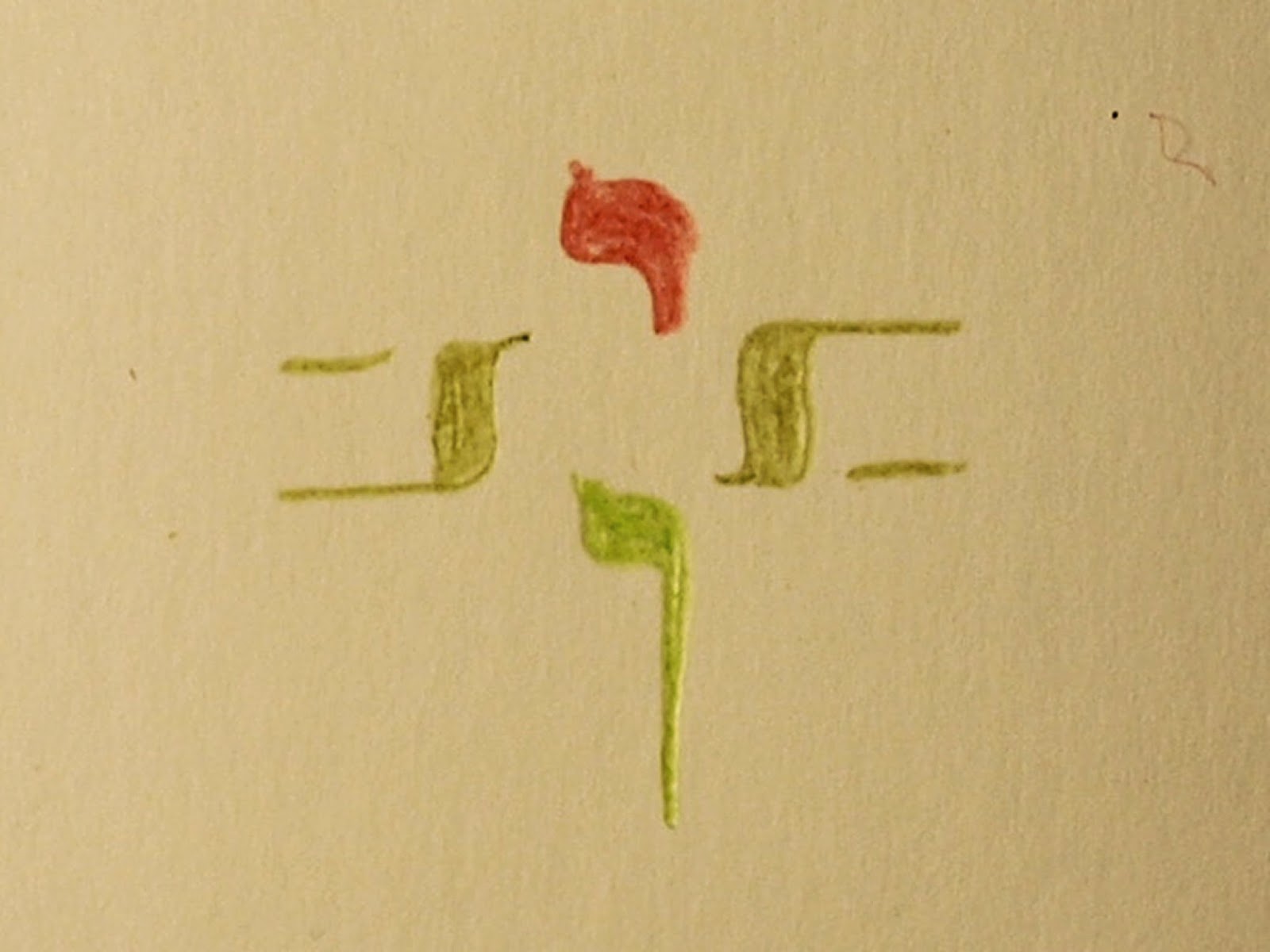
Miettiessäni jo useamman vuoden ajan Jumalan nimeksi väitettyä kirjainyhdistelmää JHWH:ta, yksi mieltäni askarruttanut kysymys on ollut: miksi tuota neljän hepreankielisen konsonantin (יהוה) muodostamaa kirjainryhmää kutsutaan nimellä "tetragrammi".

When I have been thinking already for many years four letters of JHWH, which have been claimed to represent God's name, one of the questions in my mind has been: why those four Hebrew consonants (יהוה) are called the "tetragrammaton".

"Tetra" viittaa luonnollisesti "neljään" kirjaimeen/konsonanttiin, mutta sanan loppuosa 
"-grammi" tarkoittaa "kuvaa", "kuviota", "piirrosta",    "kirjoitusta". Tetragrammi kuuluu kielellisen rakenteensa perusteella samaan sarjaan kuin "pentagrammi" eli "viisisakara" ja "heksagrammi" eli kuusisakara. Onko tetragrammi siis "nelisakara"?

Naturally "tetra" refers to "four" letters/consonants, but the end of the word means "picture", "figure",  "drawing", "writing". According to the linguistic structure the tetragrammaton belongs to the same series with "pentagram" (five horns) and "hexagram" (six horns). Is the tetragrammaton a "four horn"/fourgram?


Vastaus riippuu siitä, miten nuo neljä konsonanttia kirjoitetaan. Kuvassa oleva tetragrammi voidaan lukea sekä myötä- että vastapäivään. Kuten huomaamme, kirjaimet muodostavat nelisakaran/ristin.

It depends on how those four consonants are drawn. In the picture above we can read the tetragrammaton both clockwise and counterclockwise. We can see that the letters form a fourgram/a cross.

Voisiko Jumalan nimi olla joku kuva/kuvio/piirros/merkki?

Could it be that God's name is a picture/figure/drawing/sign?

Lienee syytä tarkistaa, mitä Jumala vastasikaan Mooseksen suoraan kysymykseen koskien Jumalan nimeä. Mooseksen kysymys löytyy 2. Moos. 3: 13:sta ja Jumalan vastaus heti seuraavasta jakeesta, 2. Moos. 3: 14: sta:

Perhaps we have a good reason to check how did God answer to the straight question of Moses concerning God's name. We can find the question of Moses in Ex. 3: 13 and God's answer immediately in the next verse, Ex. 3: 14:

ויאמר אלהים אל משה אהיה אשר אהיה ויאמר כה תאמר לבני ישראל אהיה שלחני אליכם׃

אהיה